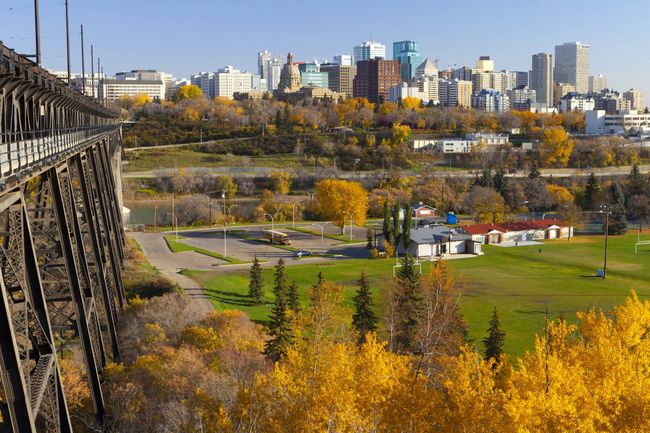
Edmonton records its rainiest summer in over 70 years

We don’t have to convince you it’s been a rough summer weather-wise in Edmonton. In fact, lightning knocked out the power to our building while we were writing this. Between the storms and the smoke, we’re starting to wonder what we did to deserve this.
But it’s not just anecdotal. The city has already blown past its summer rainfall record, and while August is usually when things start to dry out, Environment and Climate Change Canada (ECCC) says it could take some time before things return to anything close to normal.
In a typical summer, Edmonton receives around 213 to 214 millimetres of rain over June, July, and August combined. But according to Jennifer Kowal, an operational meteorologist with ECCC, some weather stations have already recorded more than 500 millimetres this summer.
“So the one that has been recording the highest amounts, and that just has to do with exactly where these thunderstorms roll over, but Blatchford has reported over 500 millimetres so far this summer,” Kowal said, adding most of the other stations are in the 250 to 350 range.
“Which is still way over what your summer total is, only halfway through the summer.”
So, if you’re on the north side and feel like you’ve been dealt an especially rough hand this season, there’s your answer.
Kowal explained thunderstorms are highly localized, meaning rainfall totals can vary dramatically depending on exactly where the storms track.
The previous summer rainfall record was set in 1953, when 417 millimetres of rain fell. Most of Edmonton’s 10 wettest summers have recorded between 330 and 410 millimetres, Kowal said.
“We have just exceeded all of our records by so much already this year.”
Kowal said this summer’s unusually wet conditions have also helped fuel the frequent thunderstorms.
We got another reminder of just how volatile those storms can be over the weekend, when thousands attending Post Malone’s concert at Commonwealth Stadium were forced to shelter before the show was ultimately cancelled because of severe weather. That storm led to downed trees and localised flooding, something we’ve become all too familiar with this summer.
Meteorologists use the acronym MIST to describe the four main ingredients needed for thunderstorms: moisture, instability, shear and trigger. This year, she said, moisture has been the standout.
“Because there’s so much water on the ground, you just have more antecedent moisture than you normally would ever have.”
All that rain has essentially created a feedback loop: saturated ground adds more moisture to the atmosphere, which helps storms strengthen and produce even more rain.
Kowal said August is typically warmer and drier than June and July, and forecasts still suggest the weather should begin trending back toward something more seasonal.
However, before that happens, the ground needs some time to dry out.
“The thing that needs to happen first is there just needs to be some time for this water to disperse.”
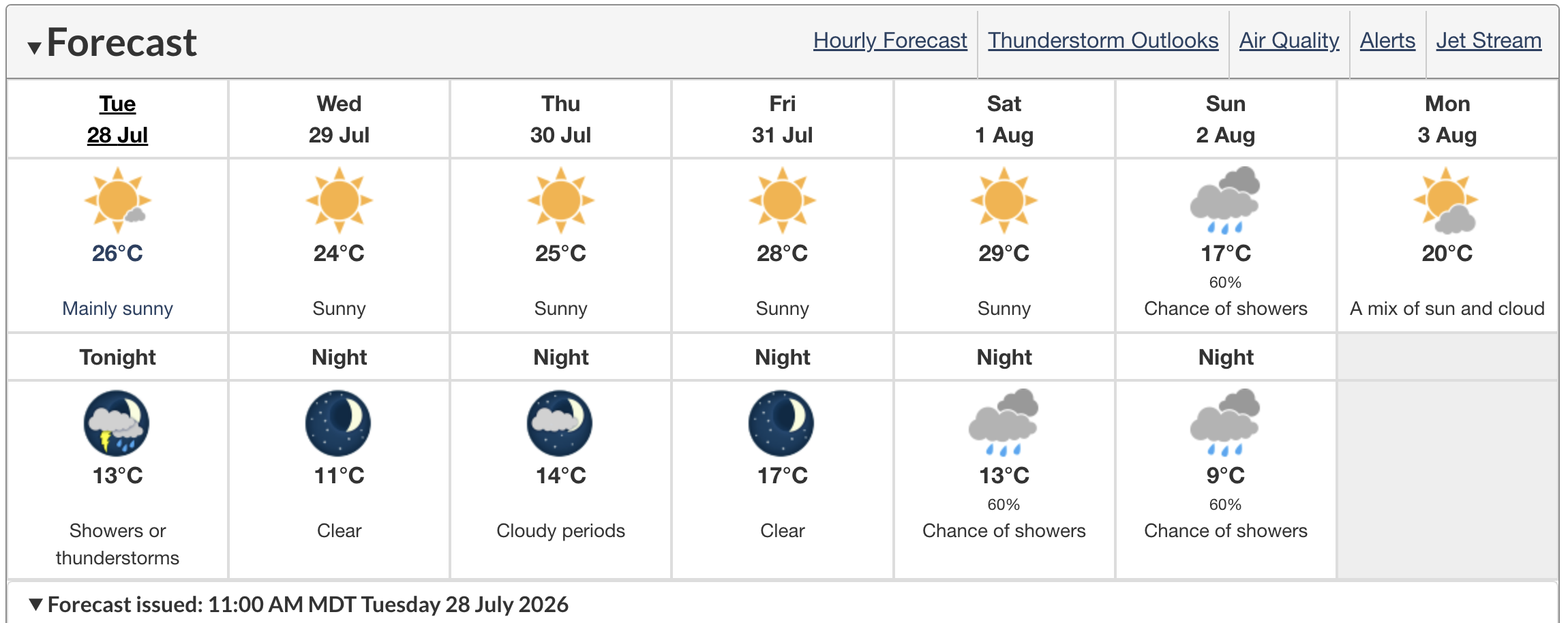
As for whether that will happen anytime soon, a look at the forecast shows we’re not done with the rain yet. ECCC is calling for more showers on Tuesday night, and a 60 per cent chance of rain Saturday evening and all day Sunday.
Originally published on Daily Hive.
Recent posts:
Here are all the World Heritage sites you can visit in Alberta
One of the most beautiful towns in the world is this charming spot in Canada