8 fascinating 'ghost towns' to discover in B.C. this spooky season
If spooky season is your favourite time of year to plan a road trip, then these B.C. “ghost towns” with fascinating histories are definitely worth adding to your travel bucket list. From a town that now sits underwater to mining towns that have long been abandoned, there are tons of spots with haunted local lore to visit.
Waldo
Once a thriving lumber hub in the East Kootenays, Waldo is now an “underwater ghost town” along the eastern shore of Lake Koocanusa, adjacent to Koocanusa Village. The original town was completely submerged when the U.S. government built the Libby Dam in Montana during the 1960s and ’70s, flooding the region to create the reservoir.
Where: Lake Koocanusa
Sandon
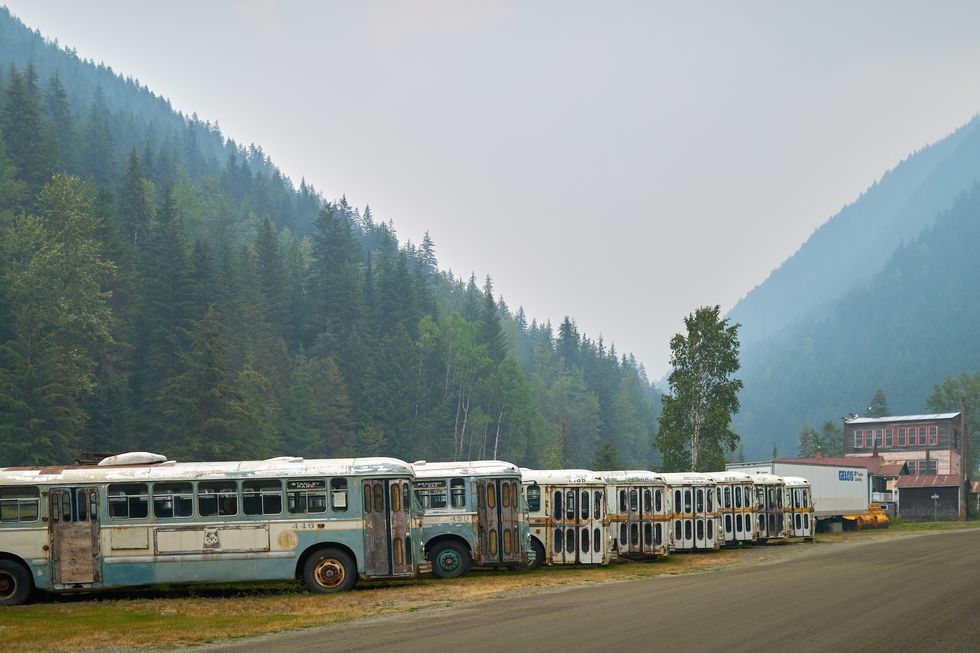
Located in the heart of B.C.’s “Valley of the Ghosts,” the town of Sandon is a former silver mining town with a “Wild West” past. Think saloon brawls, brothels, and a booming silver industry that faded as quickly as it came. By the late 1950s, Sandon was derelict, leaving just a handful of residents remaining today.
Where: Near Silverton
Leechtown
This 19th-century gold-mining town doubles as a former site of railway logging operations. On July 18th, 1864, the Vancouver Island Exploring Expedition (VIEE) discovered “payable gold” at Leech River, which led to a gold rush of its own. nd thus the creation of Leechtown. The wilderness trails at Kapoor Regional Park are a highlight for visitors, including the famed Galloping Goose Regional Trail.
Where: Southern Vancouver Island
New Denver and Silverton
The towns of New Denver and Silverton are situated on the shores of East Slocan Lake, offering visitors the chance to roam restored historical downtowns that are full of local charm. In New Denver, the streets are lined with heritage homes and public parks, as well as a 100-year-old former Bank of Montreal building on Main Street.
The New Denver Orchard serves as a stark reminder of the internment of Japanese Canadians during WWII.
Where: West Kootenay, B.C.
Kitsault
Kitsault is one of B.C.’s most famous ghost towns, built during the late 1970s mining boom and abandoned shortly after in the early 1980s. Aside from a single resident caretaker and local wildlife like silver foxes and grizzly bears, the town remains completely empty. It would have been swallowed by the surrounding forest years ago if not for decades of meticulous lawn care and groundskeeping.
While visitors here are rare, you can book a custom tour by Northern B.C. Jet Boat Tours to access this rare slice of provincial history.
Where: Near Terrace
Fan Tan & Helmcken Alley
Originally a gambling district in one of the oldest surviving Chinatowns on the continent, Fan Tan Alley is now home to a myriad of local shops, restaurants, and galleries. At less than three feet wide at its narrowest, it’s also considered the narrowest commercial street in North America.
Located between Fisgard and Johnson Streets, visitors to Fan Tan can imagine a time when gambling parlours and opium dens dominated the alley.
Where: Downtown Victoria
Barkerville
While Sandon was built on silver, Barkerville was built on gold. Situated on Williams Creek, the legendary gold rush town now exists as a heritage site with over 125 original buildings and businesses, ranging from period displays and museums to restaurants and local shops. It’s a living history museum and preserved townsite all wrapped into one!
Where: Williams Creek
Coal Creek
Coal Creek is only accessible via a walking trail from nearby Fernie, offering visitors a glimpse into the past via a former townsite. While it’s not super well preserved, there are a few buildings and ruins to see here, all remnants of a once-bustling mining community of 1,000 residents between 1898 and 1958.
Where: Near Fernie
Recent posts:
Metro Vancouver’s $2 outdoor pool sits on the forest edge and it’s open through September
B.C.’s ‘missing island’ spotted after drifting 30 km, but the mystery deepens