
December meteor showers across Canada could see up to 120 per minute at peak

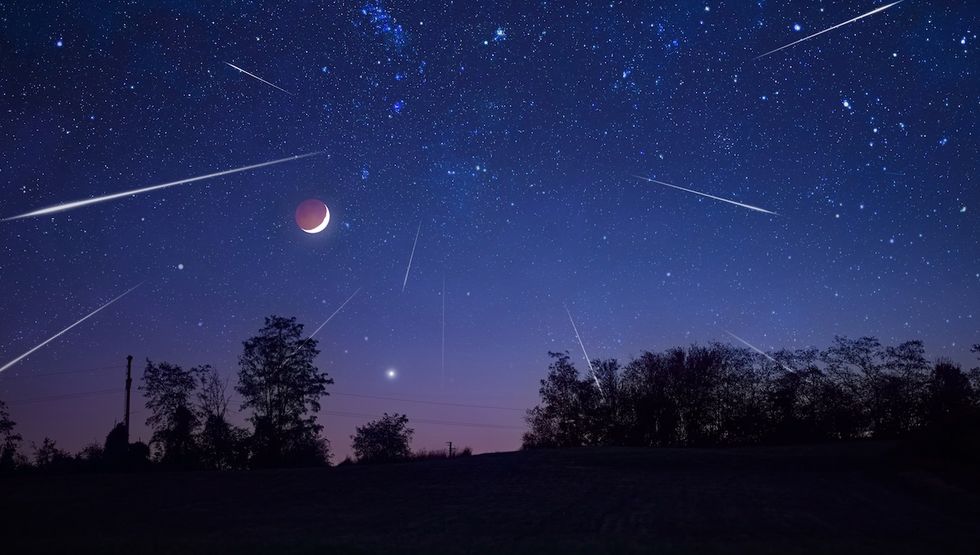
Meteor showers are set to dazzle the night sky in Canada this December, with both the Geminid and Ursid showers peaking later this month. While summer skies are often clearer and ideal for stargazing, winter may bring its own challenges, with colder temperatures and typically cloudier weather.
When will I see these meteor showers?
According to NASA, the Geminid meteor shower peaks during mid-December each year. It is considered “to be one of the best and most reliable annual meteor showers.”
It is set to peak on the night of Dec. 13 and into the morning of Dec. 14.
As for the Ursid meteor shower, it is more low-key. Per The Weather Network, it will peak on Dec. 21 and into the early hours of Dec. 22.
By the sound of it, you’ll most likely have a better chance of catching sight of the Geminids than Ursids. But why are they the best and will I even be able to see them despite the cloudy winter weather?
View this post on Instagram
Meteor showers and visibility
“The Geminid shower is typically a more abundant one than the Perseids which occurs in the summer,” the Canadian Space Agency’s Pierre Langlois tells Curiocity.
“The Perseids are much more viewed because of the nice weather and the darker skies. So of course if you want to have any action and see the Geminid showers, we need to have a very dark sky.”
Though it’s not impossible to see them in the winter, the chances are greater when the skies are clear.
If you’re living in the city, Langlois advises you hit the road, and leave the concrete jungle for a better view.
He suggests visiting a Dark Sky Preserve. Luckily for us in Ontario and Alberta, there are a few to explore thanks to Parks Canada.
Dark Sky Preserves
Dark Sky sites in Ontario include Torrance Barrens Conservation Reserve, Manitoulin Eco Park, and Killarney Provincial Park.
Bruce Peninsula National was first recognized in 2009 as a preserve for its captivating night skies, too.
In B.C, The Royal Astronomical Society of Canada (RASC) Vancouver Centre shares a list of where their members enjoy dark skies, where the public can also go.
These include Aldergrove Regional Park, Boundary Bay, Campbell Valley Regional Park and David Lam Park, just to name a few.
And for those in Alberta, there’s even a town that was designated as Canada’s first official International dark sky community.
But if you can’t make it there, other options include Cypress Hills Interprovincial Park, Waterton-Glacier International Peace Park and Beaver Hills Dark Sky Preserve.
Will the skies be clear for the meteor showers?
Considering Canada’s weather is unpredictable, it’s still too early to be certain. Snow is expected for parts of Ontario next week, including here in Toronto, according to Environment Canada.
Vancouver could see some rain, but Calgary and Edmonton could see cloudy periods in the evening – if the pattern remains consistent.
But despite some cloudy skies for other cities, Langlois is still hopeful meteor showers like Geminids, could be seen.
“You’ll still see some of the Geminids if you were under a really dark sky, about two a second, 120 per minute,” shares Langlois.
“If you’re going to be in the city, you might see only one out of 10 out of those. But it’s still worth it – it’s a free show.”
Recent Posts:
One of Ontario’s prettiest towns has a 6-acre garden adorned in twinkling Christmas lights
These dazzling Christmas light displays in & around Vancouver are free to enjoy

Karen Doradea
Managing Editor, Toronto – Karen is a multimedia journalist based in Toronto. With a strong knowledge of reporting and editing through all forms of media, she has a true passion for storytelling. She carries several years of journalistic experience and has covered the Toronto scene from local stories to national news. When Karen isn’t publishing fire content, you can find her binge-watching sitcoms on Crave, at a must-try restaurant, or scrolling endlessly on TikTok looking for the next best thing – News never sleeps.
Read articles